
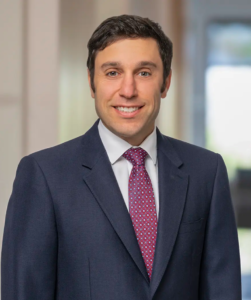
Eli Edwards is a Managing Director and Head of Real Estate Equity, US at Fortress Investment Group, based in Menlo Park. Since joining Fortress in 2011, he has focused on opportunistic equity and distressed debt acquisitions across property types and markets throughout the United States.
Prior to joining Fortress, Eli worked in real estate investment banking at Barclays and previously worked at Bank of America on defaulted CMBS loans. He received a B.S. in Economics from Duke University, where he graduated Magna Cum Laude.


INSIGHTS FROM ELI EDWARDS ON MARKET SELECTION AND INVESTMENT STRATEGY
Having the ability to invest across the capital structure creates a different kind of challenge. The opportunity set is broad, so the discipline comes from deciding where the risk is actually worth taking. Eli Edwards has spent years at Fortress making those calls, and one of the clearest lessons from that experience is that distress by itself is not enough.
That distinction has shaped where Fortress has been willing to lean in and where it has stayed away. Eli points to Class B office as an area where cheaper pricing did not outweigh weak long-term fundamentals, while San Francisco multifamily and senior housing presented a different setup. In those cases, the short-term disruption came with enough long-term support to justify building a thesis and putting resources behind it.
In this episode of The Dealmakers’ Edge, Aaron Strauss and Eli Edwards discuss how Fortress identifies real estate markets and investment themes, why some distressed assets become value traps, where Eli sees opportunity in senior housing and multifamily, and how interest rates and growth factor into equity investment decisions.
1:36 – Starting at Bank of America during the Global Financial Crisis
3:46 – Moving from CMBS servicing to real estate investment banking at Barclays
5:03 – Joining Fortress to move from advising companies to making investment decisions
6:17 – How Fortress evolved across debt, equity, and public real estate investing
9:49 – How Fortress structures its real estate equity team around investment theses
10:40 – Why not all real estate distress creates a good investment opportunity
12:03 – Building the San Francisco multifamily thesis after COVID
14:30 – Finding dislocations before the broader market catches on
15:09 – Why Fortress moved into senior housing and built operational expertise
19:12 – Entering the 1031 exchange and DST market
21:26 – Where Fortress sees multifamily opportunity and why it is avoiding the Sunbelt for DSTs
23:26 – How Eli is thinking about interest rates over the next 6 to 12 months
25:14 – Staying clear-headed through the stress of real estate investing
27:30 – Balancing interest rates and growth when choosing the next investment theme
MENTIONED IN DISTRESSED ASSETS, REAL RETURNS: EXPLORING REAL ESTATE RISKS & OPPORTUNITIES WITH ELI EDWARDS OF FORTRESS INVESTMENT GROUP
Fortress Investment Group | LinkedIn
Aaron Strauss: You're listening to The Dealmakers’ Edge with A.Y. Strauss, diving deep into stories behind commercial real estate leaders.
Hello, everyone. Welcome to The Dealmakers’ Edge. Today, we have an exciting guest, Eli Edwards, who is the Managing Director and Head of Real Estate Equity at Fortress. And he's been at Fortress since 2011. He's navigated some very interesting market cycles. And in this conversation, he really lays out a lot of the strategy he employs. He talks about the recent fund that they raised, different geographies he's interested in and how he kind of thinks about investing in the equity space, across different geographies and asset classes and markets, of course, interest rates and also his disciplined approach to executing on strategy. It's a great conversation and I hope you enjoy it.
Aaron Strauss: Eli Edwards, really great to have you on. Managing Director and Head of Real Estate Equity of the United States based in Menlo Park at Fortress. And you've been there since 2011. You've rode waves and cycles and strategies. You've been at the forefront of many, many exciting things and you still currently are. And we're really excited to learn from you. This podcast, we kind of gear it more towards the up and coming professional real estate, but we've got a variety of listeners. So we'd love to start out with your story, kind of how you got started in real estate. I know you got started in the GFC and you really did some fun stuff back then. And we're going to hear about that, but maybe you can walk us through the early stages of your career before we get to the present day.
Eli Edwards: Yeah, no, I'm happy to. Like you said, I came out in the GFC, so it was probably the best learning experience that you can have for commercial real estate. My first job was at Bank of America. I was actually supposed to be in the leverage finance group. However, when I joined that group it wasn't the same as when I got the offer. So I got to my desk the first day in Charlotte at Hearst Tower, which is their main headquarters in Charlotte. And I showed up with my three other classmates. We had just gone through about two months of investment banking training and someone came over and said, look, we're really sorry, but we actually don't need you for leverage finance. There's not a lot of leverage finance going on right now. They escorted us out of the building, not in a get out of our company way, but in a very, you are not working in the headquarters of Bank of America way. We got on a trolley, went about three blocks outside of the main strip in Charlotte, which if you don't know it, it's a big city but very thin and you get outside of that thin couple of blocks and it's a very different vibe. We went to one of the kind of satellite buildings, which was really nice and we realized that we would not be in the group that we thought, but we would be working in special and regular servicing, which at the time was actually very interesting and learned a lot doing it, but very different from what I expected and signed up for, out of college. That's how I started. We were working through some really interesting situations. Hilton was going on, some others and I were also just doing my new lease approvals and things that happen in normal CMBS day to day. Obviously, that was not where I expected my career to start out. It was a great learning point. I found it extremely interesting, at least parts of it. About six months into it, I realized I wanted to get back into kind of the front end of the job as the economy started to really recover, or is at the beginning stages of recovery. So I moved to investment banking in New York with Barclays. I was able to kind of use my real estate background in servicing to get that job. I did not realize that once you get into real estate, especially in banking, it's more specialized and it's harder to then get out, because it doesn't translate to corporates, TMT, or other sectors. But I was very happy to get into banking at that time. It was a very coveted position. So once I got into it, I loved it. I loved everything about it. I loved working with larger companies, the complexities. Remember we worked on a couple of IPOs, which at that point in my career, I thought was very interesting. Basically, I put in the long hours, learned a ton over a year before moving on and saying, okay, the sell side is great, but I want to actually make investment decisions instead of giving advice to certain companies. And that's when I joined Fortress.
Aaron Strauss: Amazing. It's been about 16 years now, I think, right? Just about.
Eli Edwards: Almost. That's right.
Aaron Strauss: That's a tremendous amount of dedicated time and loyalty and I'm sure it's rewarded and that's fantastic. And over those 16 years, oh my God, what a world of sea change in commercial real estate. So you've probably seen so many, so many interesting things. And honestly, I think the way you started in the GFC, I also went through that period. You know, what is that quote? You know, calm seas don't make good sailors. So the fact that you can see when it's extremely difficult and the emotions are running high and everything is a problem, I'm sure it informs a lot of your decision-making now and you've got a much better vantage point had you not lived through that crisis. So congrats on surviving that and thriving way beyond. And even the 16 is a Fortress. I mean, when you started, you're obviously not doing anything remotely close to what you're doing today. Maybe you can kind of walk through the career arc a little bit. I'm sure. Different years, different cycles, different markets, different groups of a… Fortress is so big and there's so many verticals. Maybe we even start a little bit about Fortress and then we can move your career arc through that. If that makes sense.
Eli Edwards: Yeah, no, of course. So Fortress, obviously a very large asset manager. I believe we have around $55 billion under management today. It's split across many different verticals, real estate being one of them. When I started within Fortress, I would say it was the same culture, same DNA as it is today, but a different company 16 years ago. So when I joined, I worked in the commercial real estate group and we did everything under the sun for commercial real estate. I was doing debt originations, buying debt, equity, public and private, so CMBS, so forth, both buying distressed and new issues. So it was very interesting. And back in 2011, it was a very interesting time in the market too. For my first couple of years, we did everything under the sun. We were buying large loan portfolios, small balance at a discount, we had just bought CW capital, which is a large special servicer, working through that, looking at other situations such as, such as that. We were doing regular, normal JV deals and multifamily across the country, but also originating, we originated one of the, a very large loan to a chain of hospitality assets across the country. So it was a great learning experience where I got exposed to everything across the sun. We've tried ourselves here at being able to look across the capital structure and figuring out what is the best risk adjusted return. And in the early days, you know, at one group, that's exactly what we were able to do and learn what makes sense, when to put risk on, what is the right return for different risk profiles. I'd say as we've evolved through just the cycle and as a company, we've grown and we've split out those divisions. We grew our equity business. I started focusing more on just the equity side in 2014, so almost 12 years ago, and have helped grow that business to where we are today. We have the debt side of the business, which has grown substantially to many different sources of capital. We have the public side of the business, which once again, we all talk to each other now and still look at the world as what's the best risk adjusted return. But we've now siloed those off to, hey, we have people specifically focused on those certain areas. And I've chosen the equity side, over the last 12 years, I'd say.
Aaron Strauss: It's been a great run. And I know the past couple of years, maybe not the best run for equities per se, relative to the debt markets and private credit and everyone's becoming a bridge lender, et cetera. But such a diversified firm, they're blessed to have stewards of capital that can collaborate and build theses together, build strategies, thought leadership, essentially, because a lot of people just run in one vertical. So to be part of that platform, especially when the groups are talking to each other, it's magic, I'm sure, internally. How about your team, if I can ask? I didn't really delve into your team. How are you situated in your specific vertical on the equity side? How is Fortress set up? Again, I'm sure there's tons of overlap in different ways, but maybe you could talk about the team you oversee day to day and how that's structured, if that's something you could share.
Eli Edwards: Yeah, of course. And we've gone through iterations of this over time. There's a lot of different kinds of ways to do this, I'd say, from the, you know, investment managers and asset managers being the same and looking after your own deals to separate departments, to splitting up people. based on geographic preferences, versus food types, on the equity side. I think where we've settled is, well, let me take a step back, because it really informs how we set up the group, is how we invest. Which, you know, we historically had been really special opportunity investors. That's how we grew up. Like I said, we can pick anywhere in the capital structure. We are still that, that is our DNA. That is what sets us apart from a lot of people. We have those relationships. We can analyze risk better than most people, because of how we grew up. However, on the equity side, what we've really learned is not all distress is good. We don't want to just chase distress around the country, across food types and just buy anything that is distressed. I think that leads people to value traps in buying something that might be a little cheaper than the norm, for whatever it is, but still underperform the broader market, because you got into an area, a geography, an asset type that just doesn't have the tailwinds that others do. So instead, we've really focused on a top-down approach first, in finding theses across the country, which could be geographical regions, it could be asset types, it could be something else that where we can find kind of short-term headwinds, which allows for a fertile hunting ground to find the opportunities that we do best, but coupled with medium to long-term tailwinds. And that's the most important part. So for example, class B office eight years ago, we were not buying, because although in fact that it did have some distress, we did not think or to believe in the cashflow profile going forward in the tailwinds. So we did not chase that distress and we really haven't bought any even prior to 2022. However, and we can get into later San Francisco multifamily was a perfect epitome of this. We saw the theme, we saw that this was a core market that had gone on bad times through COVID. We saw the upswell happening. We believed in the medium to long-term tailwinds, but also the short-term distress were multifamily was trading at 50 to 60% below the previous peak. That was a great thesis. We formed a team just to attack that thesis, staffed it up and tried to buy as much as we could within that thesis and grew it over time. So in terms of our staffing, to go back to it, we staff, how we think, which is we really on the investment professional side, try to staff a group based on a specific thesis that we find very interesting. And who has the most expertise within that thesis. It could be regional, it could be asset type, it could be both. But that's how we staff it from an investment professional side. Then we have an asset management team that looks after the assets. Post-purchase the partners stay on board and ferry it through. There is some overlap with the investment team and asset management, obviously, but we do try to keep the investment team focused on originations and the asset management team focused on asset management.
Aaron Strauss: That was a great answer, because it really summed up so many themes to touch on. I mean, I think a lot of investors and we see them all the time, this is a good deal, it's a good deal. Well, all right, that's just one attribute. But when you step back and what is the broader theme? What is the global strategy? Why are you chasing this? And can you manage your resources, or I should say, marshal your resources towards that opportunity in very select fashion. A lot of it is really just saying no to the shiny object and having conviction to move forward despite, obviously, natural tailwinds and news stories, frankly. I mean, I think coming out of COVID, San Francisco was untouchable. And now you look at it, all of a sudden it's just like, it swung back in such a wild way and to have the conviction, honestly, to invest in countervailing themes, that's really where people, you know, make their mark, if you will. So congrats on that. And I know different markets, you know, you've different theses towards, but San Fran is a great, great exposure there and great story. Any other markets you want to touch on, as long as we're talking markets?
Eli Edwards: Yeah. I mean, look, San Francisco, like you said, shows exactly what you… rerun the bad headlines. It’s not all bad headlines, by the way, but it's…
Aaron Strauss: I know, I know, it’s just a couple, yeah.
Eli Edwards: … but it's good to, it's good to look at it. Because once again, the art of investing is really finding areas, where you can push assumptions more than the broader market. Those are the dislocations that we look for. And you look for patterns and data, which we have as a firm from all the different platforms that we talked about earlier, to get ahead of those themes and then try to buy as much as possible before the market catches on. So San Francisco was one of them. Another one that we really focused on and continue to focus on is senior housing. It is one where the fundamentals have been unbelievable since really 2021ish. And that's when we really started to invest. There had been about 15 years of poor fundamentals, quite honestly, of people believing that demographics were going to come to head the silver tsunami as some people call it. But supply really was built for 10 years in anticipation of that tsunami, which came, but a lot slower than people imagined with technology, technological advances and otherwise. And so what people don't realize is for 10 years, it really struggled, because supply outpaced the expected demand. And then COVID happened and blew the top off of it. We looked at that and said, this is really interesting. Most of our competitors at that time were hands-off, because they had gotten burned. But the demographics were still coming. It was just delayed. And supply, because of COVID, completely sapped. And usually when you have coming demographics and demand and no supply, it brings really good things. And obviously, there was a ton of distress out across the country, because of what happened in COVID. So that was another theme that we focused on pretty heavily. We actually believe that you need operational expertise there. So we built our own manager and have been buying, we, you know, senior housing is a little different. And it shows the next part of what you do is, you know, once you find a theme, it's how do you attack that theme. And we're not just a let's buy distress, because there was plenty of it in senior housing and you had the backdrop of the tailwinds of fundamentals. We're not looking for the most distressed deals on an asset level there. It is very operational, reputations matter. So what we found and what we decided was not to chase the deeply distressed middle market deals that usually have worse demographics to them, but let's just buy the dislocation of the more affluent deals, the deals where we believe the affordability was right up with the home price appreciation, where you can have more inelastic demand. And that was really the dislocation, instead of chasing the distress deals that a lot of times had public funding subsidies, which are a little bit more opaque. We did find what we do best, in terms of corporate distress, forcing people to liquidate those better assets, to get a really good basis, but not chasing the deals where there was distress on the property level, that is much harder to turn around there. So that's another example of something that we really like, the demographics, the affordability aspect, because of homes appreciating. We think it's only going to get better going forward. I think the market has caught on a little bit. It's gotten a lot more competitive. Cap rates have declined even as interest rates have increased, because of that, we still find it very interesting. But once again, you have to be selective, you have to have that operational expertise to have an advantage today, which luckily we have given, we've been really focused on it for the last five years.
Aaron Strauss: Terrific, terrific. And also that discipline that comes with kind of marrying the thesis to the execution. So that's all part of the same theme. And that's terrific. I know you recently launched this fund, specifically to target these strategies, 1031, DST platform, senior housing. We talked about student housing, I believe was another strategy you're pursuing. And I know multifamily as well. You're fairly bullish depending on the market. Maybe you could talk about that fund deployment, global strategy. I know we hit it on a little bit, but what you're excited about, in connection with that fund and how you're going to deploy those resources.
Eli Edwards: Yeah, so the 1031 exchange channel, the DSTs is something that we've gotten into recently after studying it for multiple years. The core plus real estate space in general has been really interesting for a while. I just didn't think it was the right time to get into it prior to COVID really. I thought we were nearing the end of the last cycle. Rates were already low, although not as low as they became. Fundamentals were starting to taper off. Obviously, COVID supercharged it for a little bit, for a couple of years, but then I think they've really fallen back to earth with overbuilding and otherwise, in 2022 and onwards. But today, as we looked at it, we've really had a great reset of basicities across core and core plus assets in housing, I think that's really interesting. And if you have a 10 year horizon, so you don't have to time when those assets are coming back and you can pick the relative winners, in terms of those long-term tailwinds and get a great basis today. We thought that was one of the best risk adjusted returns out there. We then kept looking at how, once again, we wanted to attack that and DSTs came top of mind. I think it's a really interesting source of capital. One obviously allows the end user to defer taxes, which is a huge benefit in itself and creates a captive demand of people that it's really a win-win for both, whoever buys the assets and the people contributing the capital. That market is just increasing, it had a banner year, one of its best years ever, last year, with over $8 billion deployed and DSTs. You know, in some estimates, I think the whole 1031 markets around a hundred billion, maybe even larger. So it's just a piece of the overall pie. This year it's doing better than last year and continuing to grow. So we said there is a capital base there that has a need based product for the exact thing that we think is most interesting to invest in right now, i.e. core plus capital to go about. So that's really how the DST market came about. In terms of what we're investing and why it is those housing products, the US is still very underserved, in terms of housing. There are certain pockets that have just gotten way temporarily oversupplied, so are struggling, but that's creating an opportunity to get in at a fantastic basis, if you have that long-term time horizon, which the DST market does. They're looking for 10-year holds, once again, steady passive capital and then slow but sure appreciation of the capital base. Something we find is really interesting. I think multifamily, we're not really targeting the Sunbelt markets right now for DSCs. I don't think that's appropriate. I think there's some pain still to go there. But some of the other markets that are more less supply heavy, that have been kind of more steady in the Midwest and the Northeast, I think are really interesting newer vintage assets that have a basis reset, because of rates and otherwise, to levels we haven't seen in a while, but still have demand drivers and no supply. That's a fantastic and I think a generational buying opportunity.
Aaron Strauss: Well said. How about rates? As long as they're on the topic, obviously rates have fluctuated. They will fluctuate. Inflation, day by day, you get different reports. I mean, it's just completely unclear. There's geopolitical risk, et cetera, et cetera. But even two or three years ago, people were anticipating, oh, by now rates will go down, rates will go down. And I'm sure you're sick of talking about it, but you are in the institutional world. So we got to ask you the standard questions too. I mean, hire for longer? How long? Is it really going to change any of your strategic thinking, because you're more of a multi-year horizon discipline investor? But what is your take of the next 6, 12, 18 months, if you had a gut feel? Because I mean, you are in the equities business and you see the way it percolates and how it affects everything.
Eli Edwards: Rates matter in real estate. There's just no question about it. It's one of the biggest drivers along with growth, in terms of cap rates, which drives value. So it does matter. What I will tell you is, no one has a clue what's going to happen on rates at this point. I think my inkling and I know a lot of people agree, is there's probably a better chance that they increase before they decrease. But, you know, a lot of different variables can change that in a heartbeat. So how we look at it is, we need to be very cautious, because if everything stays status quo to today, they probably will rise over the next 6 to 12 months. But there could be shocks one way or the other that could change that dramatically.
Aaron Strauss: Absolutely. I actually have another question that has nothing to do with rates or institutional thinking or whatnot, but we call the podcast The Dealmakers’ Edge, because to really think thoughtfully and to handle the scope of responsibility, frankly, that you have as a steward of capital, leader of team, you know, making critical decisions and influencing a lot of resources, frankly, need to be in a good headspace. So we call it The Dealmakers’ Edge, because this business is stressful. I mean, we're on a podcast here and we're talking about macro themes, but there's a million things that hit your desk and it's just naturally uber stressful. And if you're sitting in front of maybe somebody who's junior on your team working for you and they're just kind of stressed out about the business and they're trying to get their headspace in the right place. You know, you have to have a lot of clarity and conviction in your day to day. So how do you kind of shepherd your mind through this very tumultuous world of commercial real estate and dealmaking? I try to ask this to everybody. We always get interesting answers, but the headspace has to match the execution.
Eli Edwards: Yeah, it's a great question. What I'd say is what I think of as the best investors are going to feel it. You feel every little shake on the ground that affects every investment, big or small. It's impossible not to take that home with you. And that's why, at the end of the day, you're going to get the best results for your investors. But to your point, you can't let that weigh on your mind. You can't let that cloud your decision-making, which is really hard to do in commercial real estate, when the tides do change pretty dramatically, especially over the last four years. So what I really try to do and try to focus within myself is really say, what can I do the best today that's going to make an extra penny for my investors? Focus on the little things, on the go forward instead of the go back. What already happened, you can learn from and you need to and you need to contemplate it and understand how you can do better in the future, whatever it might be. But for today, it's just, how do I squeeze every last penny out of my investments going forward? That can be new investments and that can be old. And so you have to shed, you have to learn from the old lessons, but shed the emotional baggage that comes with them, to make clear decisions. And that's the best way to one outperform, but two, to make sure that you're actually doing the best for your underlying deals and investors that you can do.
Aaron Strauss: Very great answer. It reminds me of somebody told me once that I'm going to probably botch it, but he said, yeah, I have to update your mental models to reflect your current reality. And it sounds like it's almost like a mark to market mentally, which you do moment to moment and that responsibility level, balancing that against the realities of just the pressures of the industry. You've done a fabulous job and you're doing a fabulous job and it's something that people can really learn from, which is why I asked those more slightly awkward questions as opposed to traditional equity markets. Anything else I could have asked you, but that I didn't ask you, or anything you're very excited about, in the upcoming months, opportunistically? I'd love to give you more of a general question.
Eli Edwards: That's a good question. Look, I think you mentioned interest rates and how I look at the world is that interest rates obviously matter, almost the most for commercial real estate and we have no idea where they're going to go, but they lean higher. How we focus and why I think we have an edge and why we outperform is if you think from the top down, there's really two components of cap rate that matters for value, it's interest rates and growth. If you can find the areas of growth, especially where the perceived risk is higher than the actual risk. So you can lean into assumptions, you will do better on growth. So not only will your NOI increase more than the market, but cap rates will actually come down, even in the face of interest rates, which is what happened in San Francisco multifamily. It happened in senior housing. And so picking those themes and then getting going and attacking and finding the best deals within those themes, to my mind is how we invest and the best way to invest. It allows you to not be interest rate agnostic, but to do well, especially relatively, even when interest rates do go up. So I view that as essential to investing. And for the shops that just focus on, I'm the best at multifamily in Anaheim, for example, that can be great. And that's a great tool for the toolkit, but it's going to go up and down. And if Anaheim goes down, it doesn't really matter how good you were. So for us to be able to look at the whole world, to take our DNA and pick the winning spots that are going to do better than the market perceives, allows us to do well at any interest rate environment on the equity side. So most of my time is focused these days on figuring out what is the next theme, slash themes that we can really attack to outperform in the current environment.
Aaron Strauss: I got to tell you, it's been a fabulous conversation. I've learned a lot and I'm sure people listening have learned a lot. I really appreciate the time. We're going to watch your success continue. And I know you're super active and you're juggling so much. So again, really meaningful. You took the time.
Eli Edwards: Of course. Thanks for having me on.
Aaron Strauss: Thank you for joining The Dealmakers’ Edge. Don't forget to follow us on your favorite podcast platform. And please give us a five-star rating so more people can follow the conversation.
The Dealmakers’ Edge with A.Y. Strauss highlights the stories, successes, and struggles behind major commercial real estate investors. Each episode offers a behind-the-scenes look at commercial real estate leaders and their unique edge.
Hosted by Aaron Y. Strauss, Managing Partner at A.Y. Strauss
 Aaron Y. Strauss is one of the leading legal advisors in the commercial real estate industry, providing insight and guidance for billions worth of transactions during his career. As our firm’s founder and managing partner, he has positioned A.Y. Strauss as one of the region’s most respected law firms for commercial real estate owners, lenders and sponsors, serving the needs of our clients with the utmost in care, integrity and transparency.